Child's Smile
A beaming child's face with soft, rounded relief — a joyful keepsake for parents and grandparents.
Your artwork delivered as a high-resolution 16-bit grayscale depth map (4096 × 4096 px), ready to download the moment you check out. It engraves in 3D / depth mode on diode, fiber, UV, and CO2 lasers — white is the highest surface, black is the deepest cut.
About this piece
- Diode laser
- Keepsakes
- Acrylic
Laser & material guide
Recommended starting points for diode, fiber, and UV lasers (CO2 included) across popular blanks. These are conservative baselines — always run a test swatch on scrap of the same material first.
- Mode
- Grayscale 3D / "depth" mode — turn OFF dithering. White = highest surface, black = deepest cut.
- Resolution / DPI
- 318 DPI · 0.08 mm line interval (preserves fine detail)
- Passes
- 2–3 passes for full relief on this highly detailed map
Lots of fine detail here — slow down 10–15% and keep focus tight. Run a small power-ramp test before committing to a large blank.
Starting points for diode, fiber, and UV lasers (plus CO2). Always test on scrap first.
Great value for wood relief — map MIN power to white, MAX to black for the full depth range.
Use ~30–60 kHz. Fiber chars rather than vaporizes wood — best on darker species; expect more scorch than CO2.
Cold marking — crisp, light-tone detail with almost no scorch. Excellent for fine faces/fur, but relief stays shallow (surface tone). Ideal for highly intricate maps.
Higher-wattage diodes (20W+) reach full relief in fewer passes on dense hardwood.
Use ~30–60 kHz. Dense hardwoods take fiber relief well but darken heavily — sand or finish after for contrast.
Sharp, low-char tonal detail on figured grain; shallow relief only. Best when you want photographic crispness over depth.
UV's standout material — engraves clear AND colored cast acrylic with a clean frosted relief and no melted edges. The best choice here.
Use black-cast acrylic; clear acrylic does not engrave with a diode.
Works on most cast acrylics but melts edges more than UV/CO2; keep speed high and power low.
Engrave from the back for a clean front-facing relief.
Use ~40–80 kHz for a frosted light-tone mark.
Bright, high-contrast frosted tone with fine gradient control — superb for portraits on dark slate. Tonal only, no depth.
Slate is tonal on every laser — no true relief depth.
UV frosts glass cleanly without the micro-fracturing/chipping that diode and CO2 cause — the recommended laser for glassware and tonal portraits.
Wet paper / dish-soap coating reduces chipping. Tonal only.
Fiber (1064 nm) passes through clear glass and will not mark it.
Diodes do not engrave clear glass without a coating/marking spray.
Use ~30–60 kHz. Crisp dark mark; keep power low to avoid burning through thin hides.
Clean, low-odor light mark with excellent tonal detail and minimal heat distortion on thin or dyed leather.
The only way to get true 3D depth in brass: start ~38 kHz, 0.02 mm line interval, ramp passes from coarse to fine. Air assist + frequent debris clearing.
High-contrast cold surface mark on bare brass — sharp tonal detail, but essentially no relief depth.
Cannot engrave brass. Both only surface-mark with marking spray (e.g. Cermark) — no relief.
True 3D depth: ~40–60 kHz, 0.02 mm line interval, multiple slow passes. Air assist required; expect dark oxide unless cleaned/polished after.
Permanent high-contrast black/grey cold mark with crisp gradients — great for photo-style plaques, but surface only (no relief).
Cannot engrave steel. Both only anneal or mark with spray — no relief.
Pick your laser, then your material. Diode (10–20W) is the budget all-rounder for wood relief; fiber/MOPA is the only laser that deep-engraves metal in true 3D; and UV (355 nm) is a cold laser that marks acrylic, glass, slate, and bare metal with photographic crispness and almost no scorch — though its relief stays shallow (surface tone). CO2 remains a clean choice for acrylic and wood. The same grayscale file removes material at different rates per surface: soft woods and leather cut deep and fast, hardwoods need more passes, and slate and glass register tone rather than depth. Always map your laser's MIN power to white and MAX power to black, then run a test swatch on scrap of the same material before the final burn.
Bring it to life on any surface
Get a flawless burn
- Engrave in grayscale / 3D depth mode — white is the highest surface, black the deepest cut.
- Run a small test tile first to dial in power and speed for your specific material.
- Use multiple passes on hardwoods and metal for deeper, more sculptural relief.
- Keep the focal length consistent across the piece for even, true-to-art depth.
Yours to create with
Made by makers like you
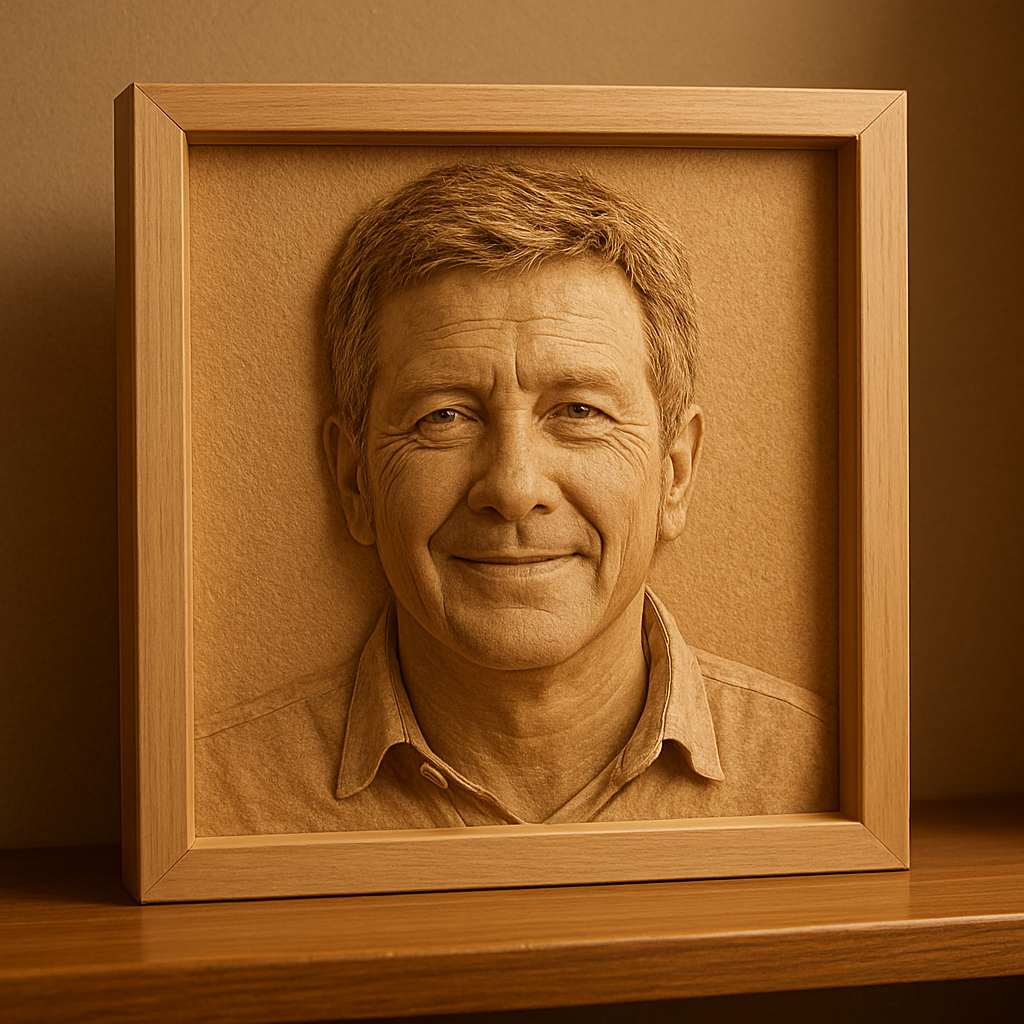
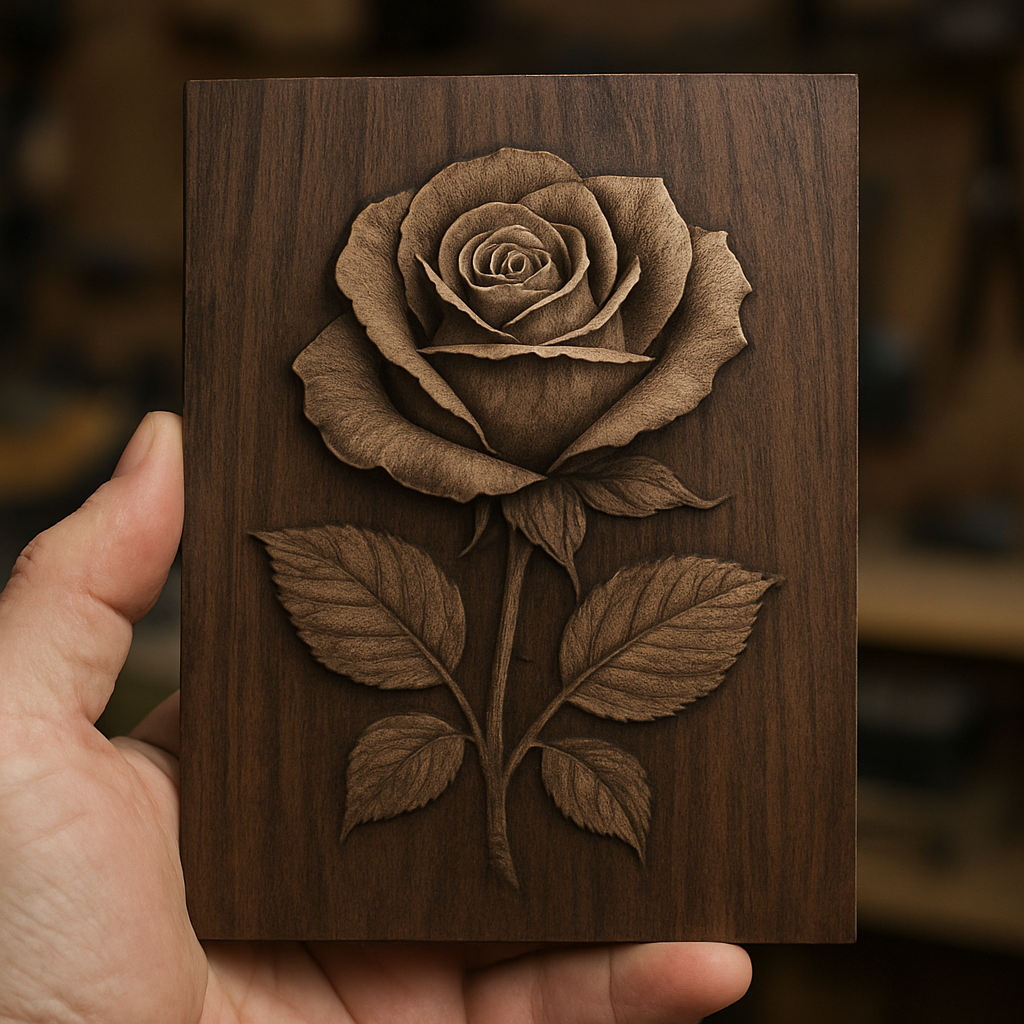
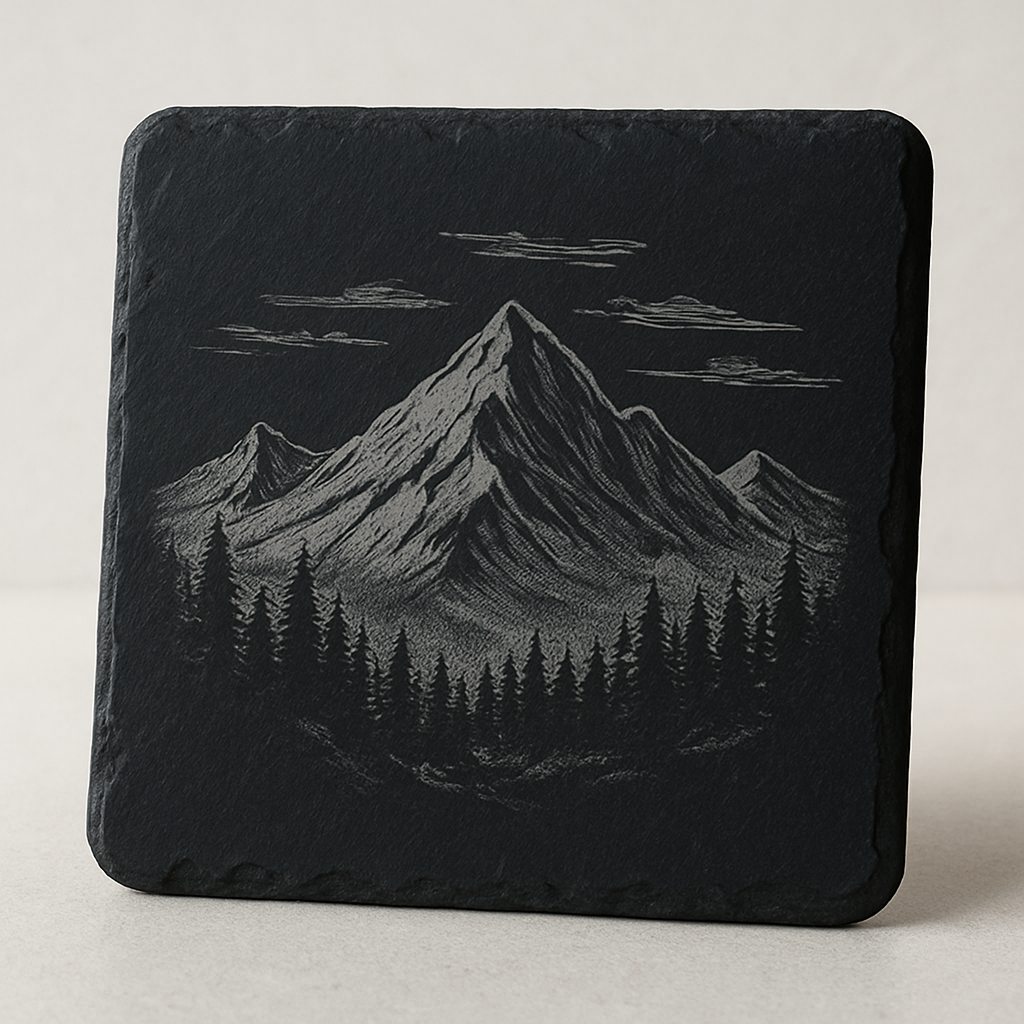
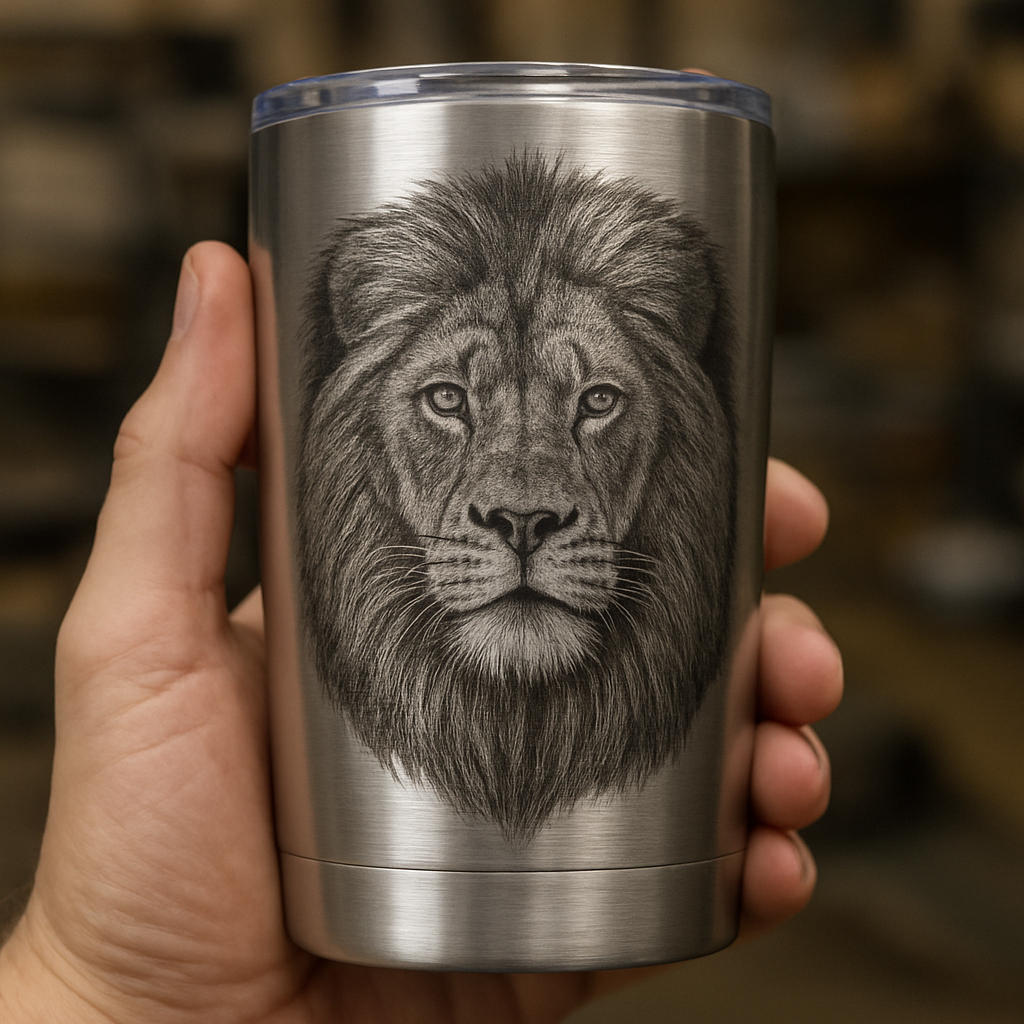
More Custom Portraits artwork
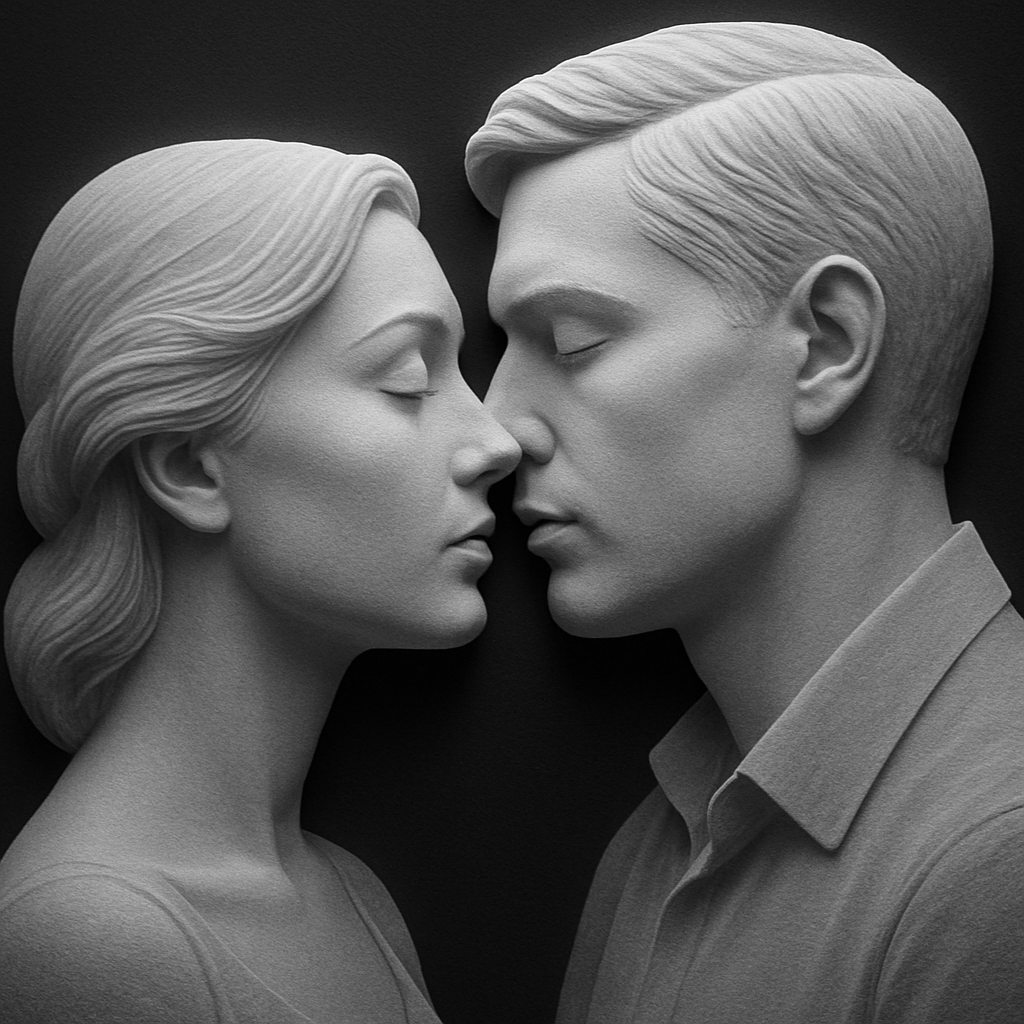 Bestseller
The Almost Kiss
$4.25Two faces in tender close profile on the edge of a kiss — an intimate, romantic study in relief.
Custom Portraits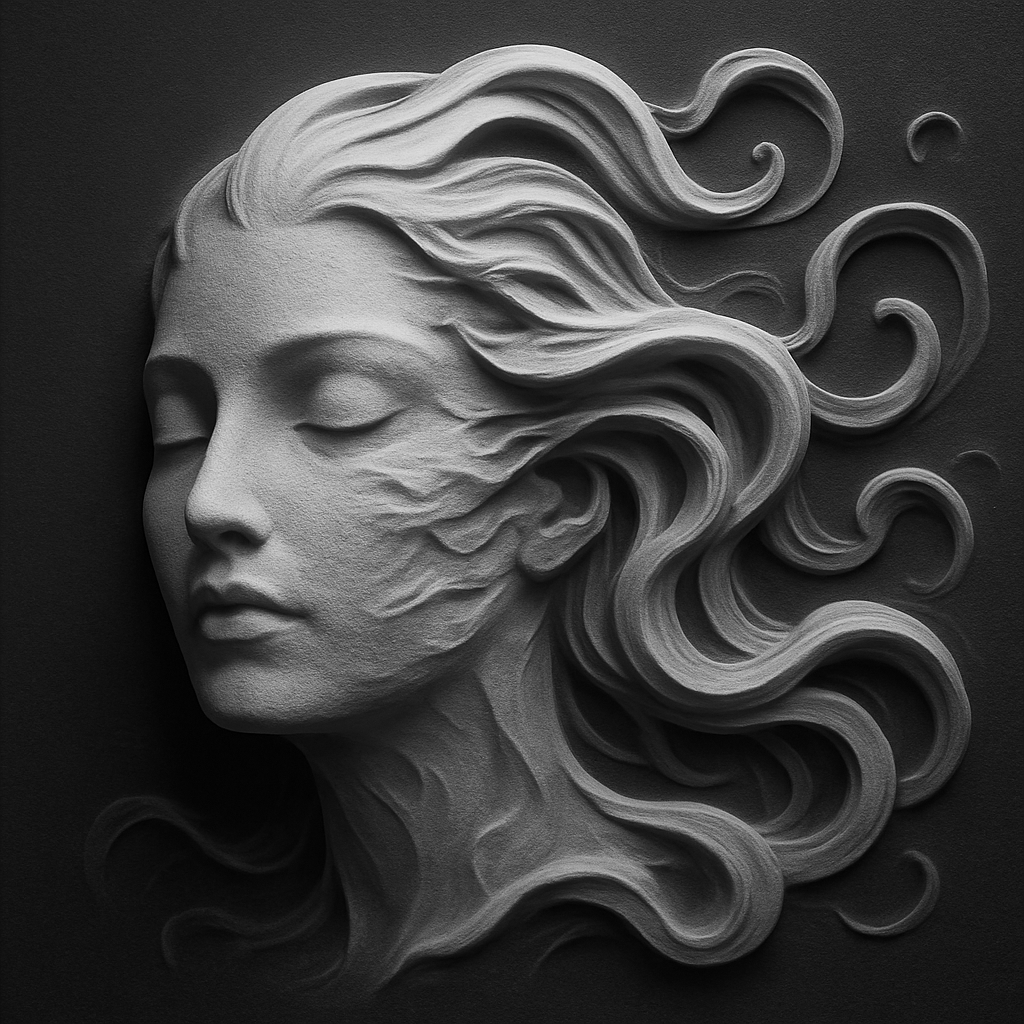
Flowing Muse
$4.50A woman's face dissolving into flowing ribbons of hair — a surreal, elegant abstract relief.
Custom Portraits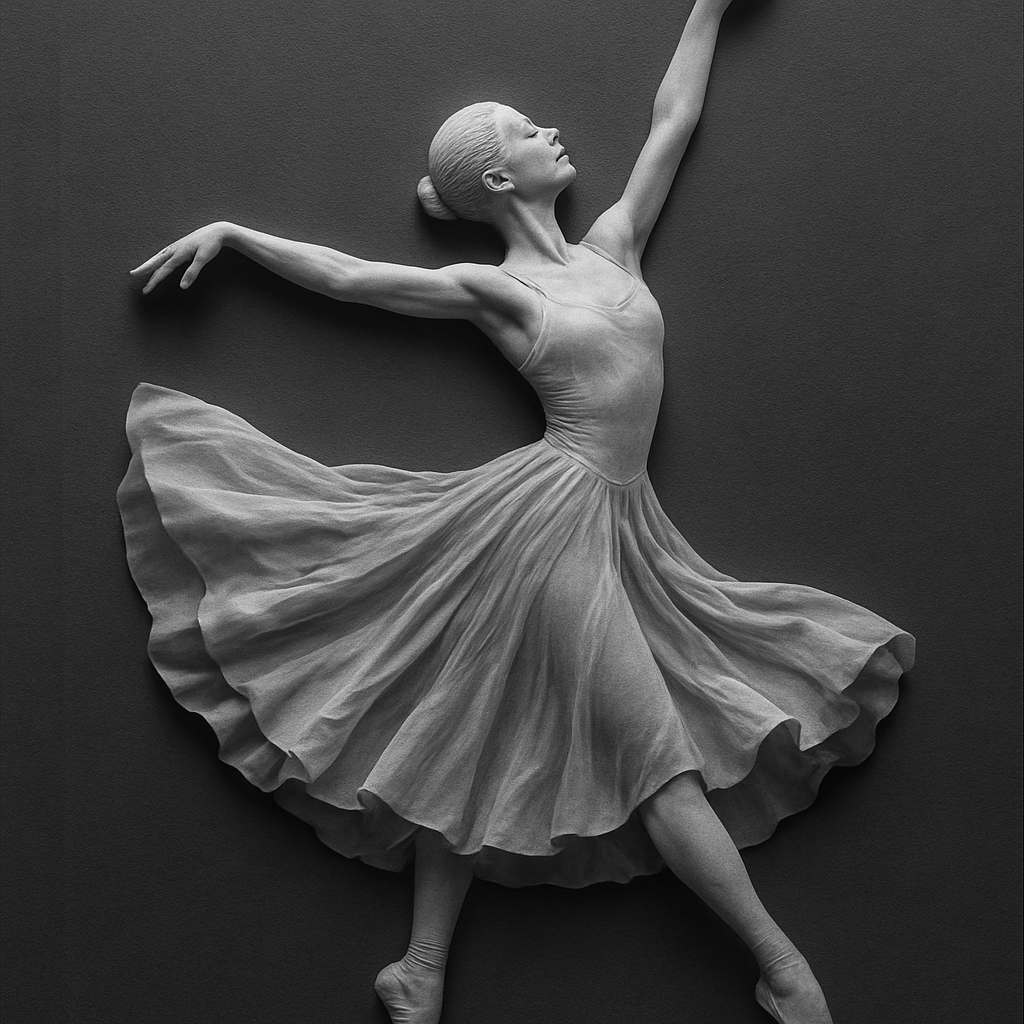
Ballerina
$4.25A ballerina caught mid-pose, flowing tutu and extended arms — grace and motion sculpted in relief.
Custom Portraits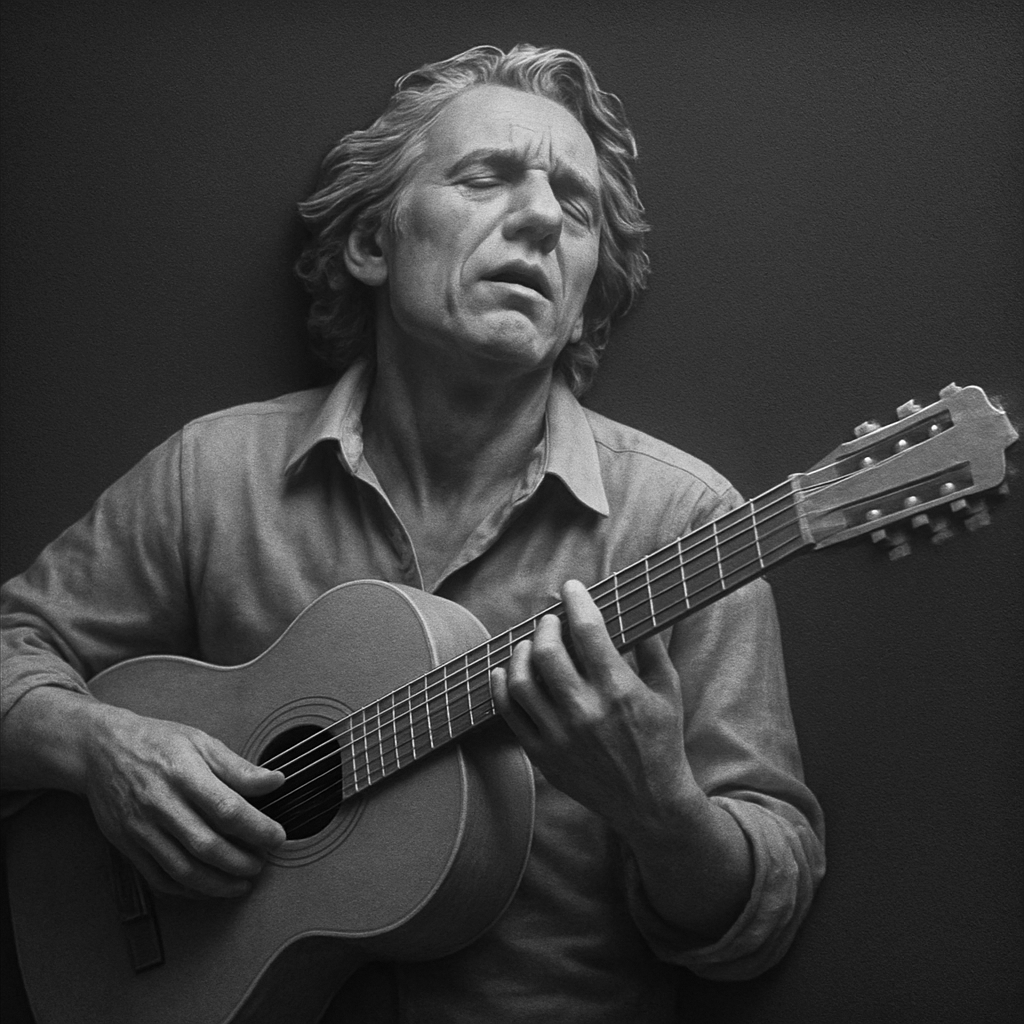
The Guitarist
$4.00A soulful guitarist lost in the music — an expressive, characterful portrait in relief.
Custom Portraits